Following a successful collaboration on the original farmhouse, the clients and Hendricks Churchill eventually worked on the second phase of the project. The team had discussed a broader scope during the original renovation but suggested that they hold off until the family was settled and enjoying life in their new home. A little time living on the property seemed like a good idea before doubling the scope and budget.
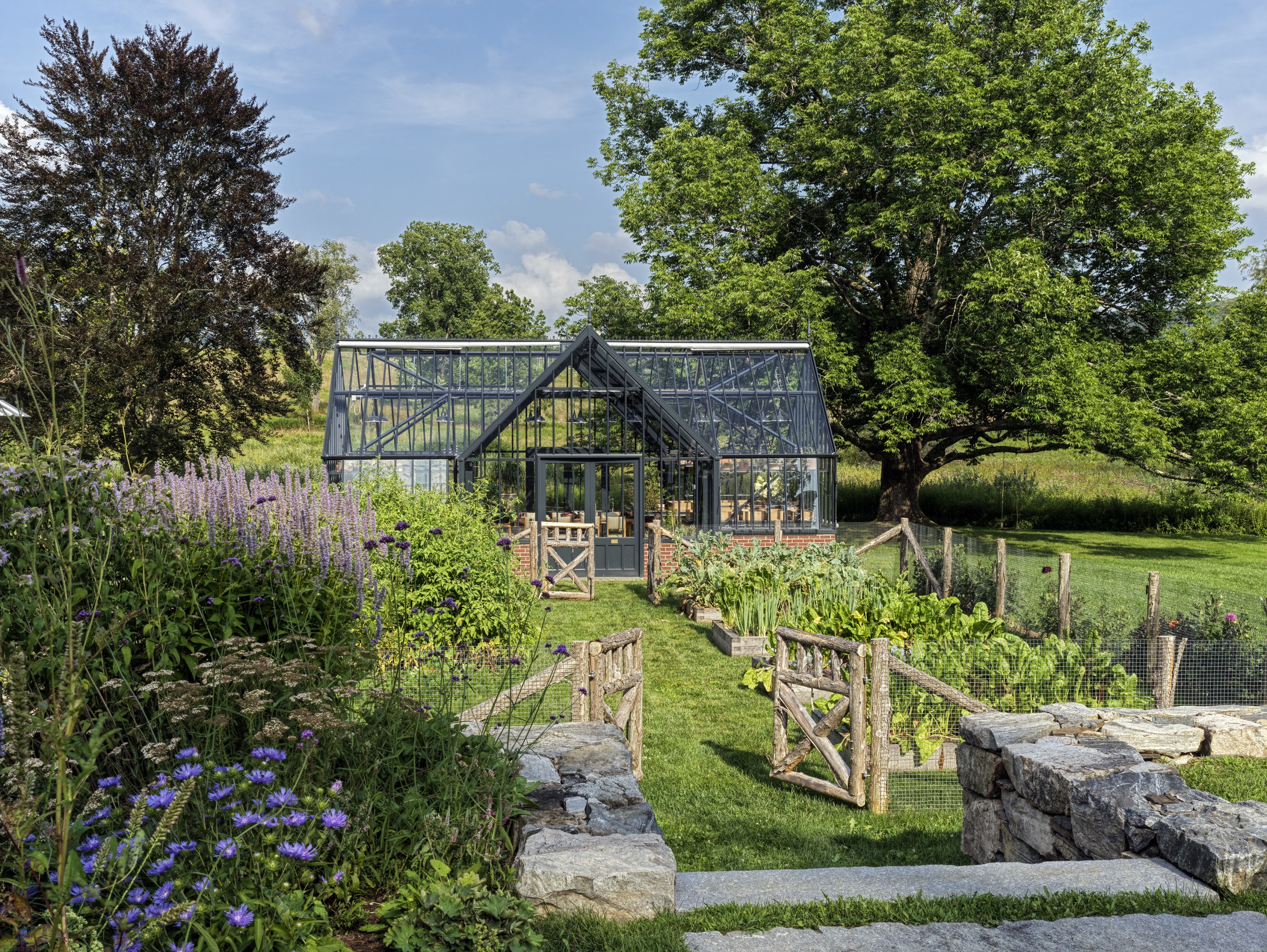
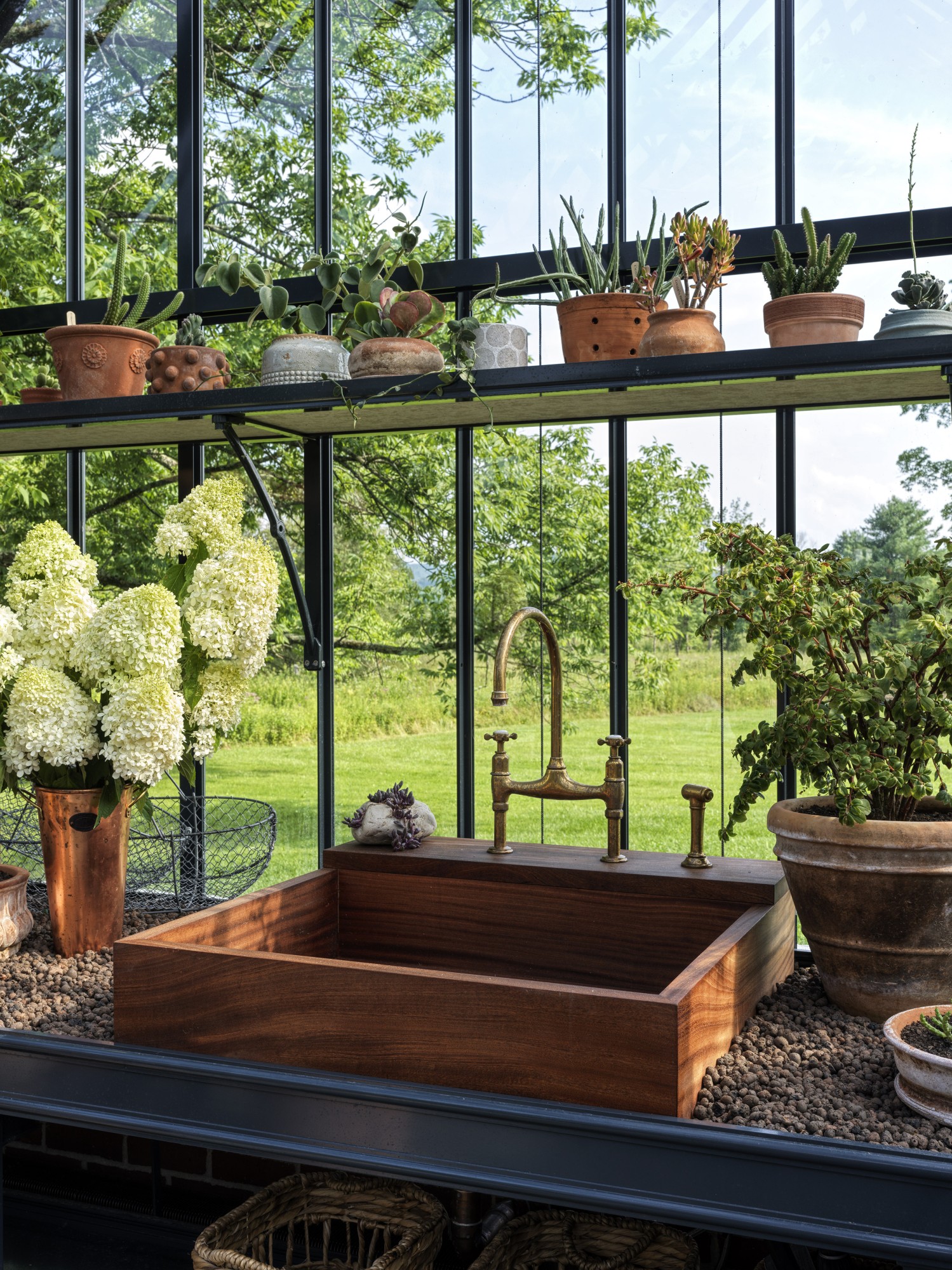
It was during the Covid-19 pandemic that the owners decided to leave Manhattan to live full time in Sharon, Connecticut. While living with two teenagers, working from home, and accommodating a steady flow of guests, the family decided it was time for the second phase. This started with a master plan for the property, along with a carriage house, a greenhouse, and a swimming pool.
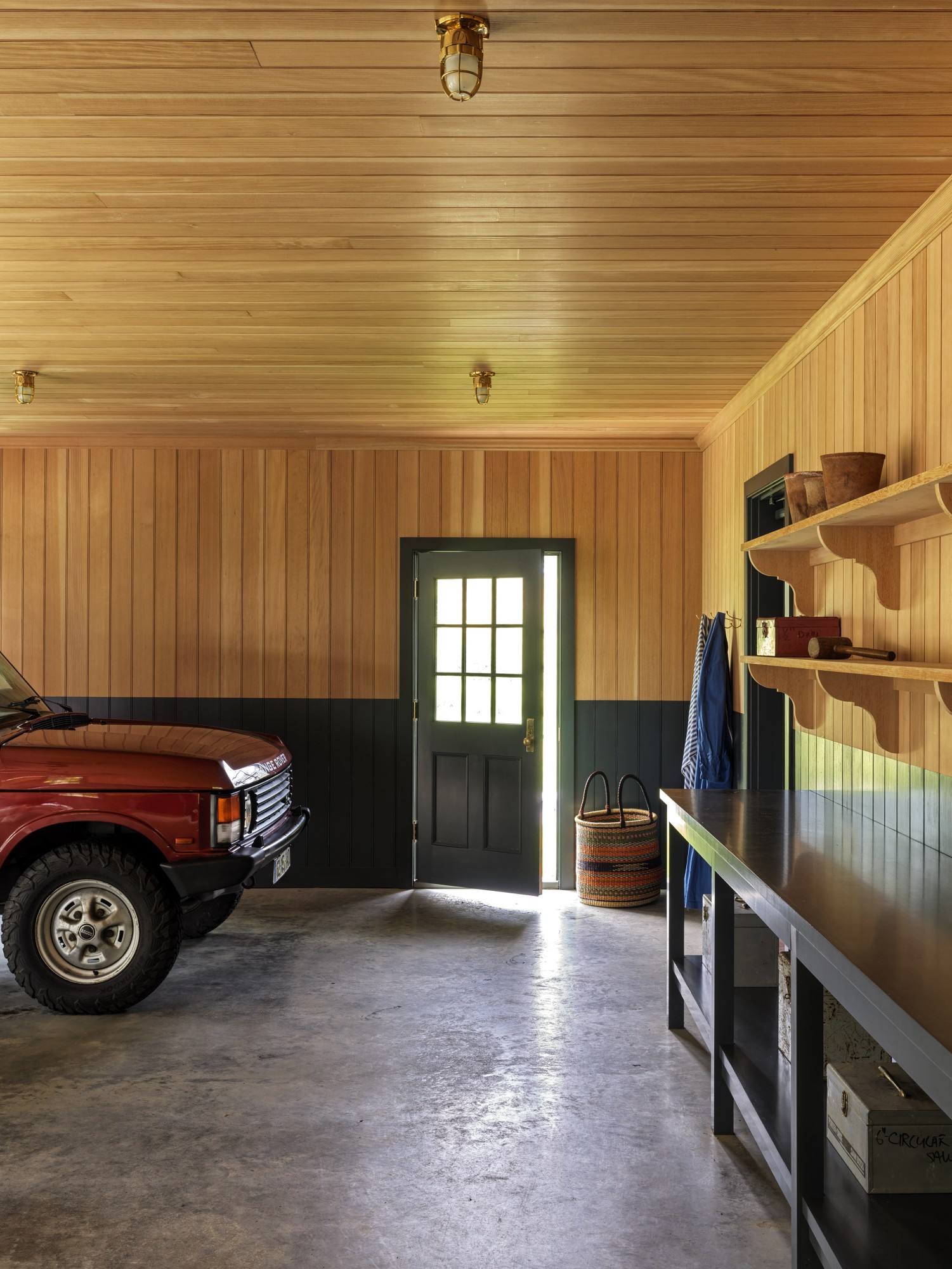
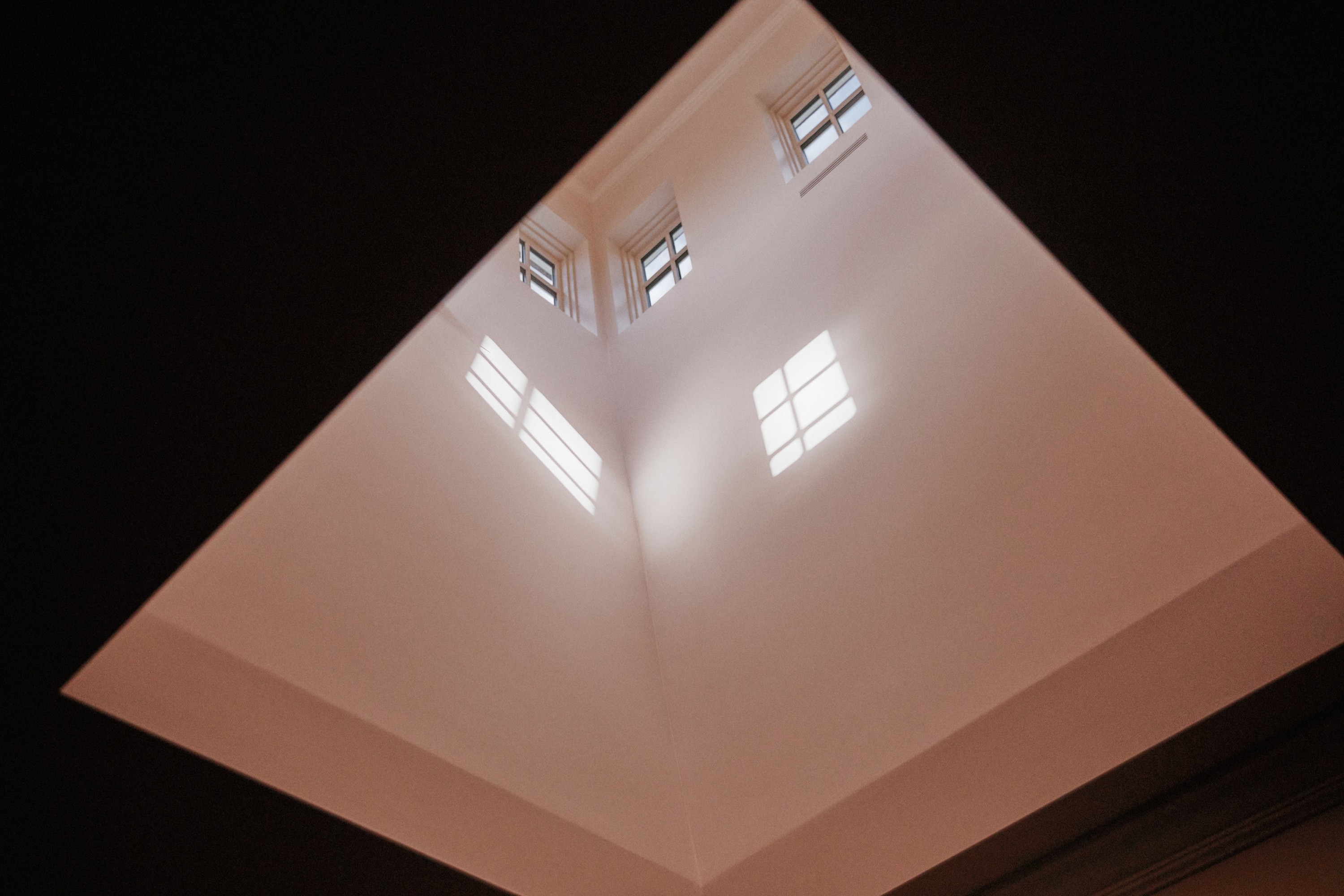
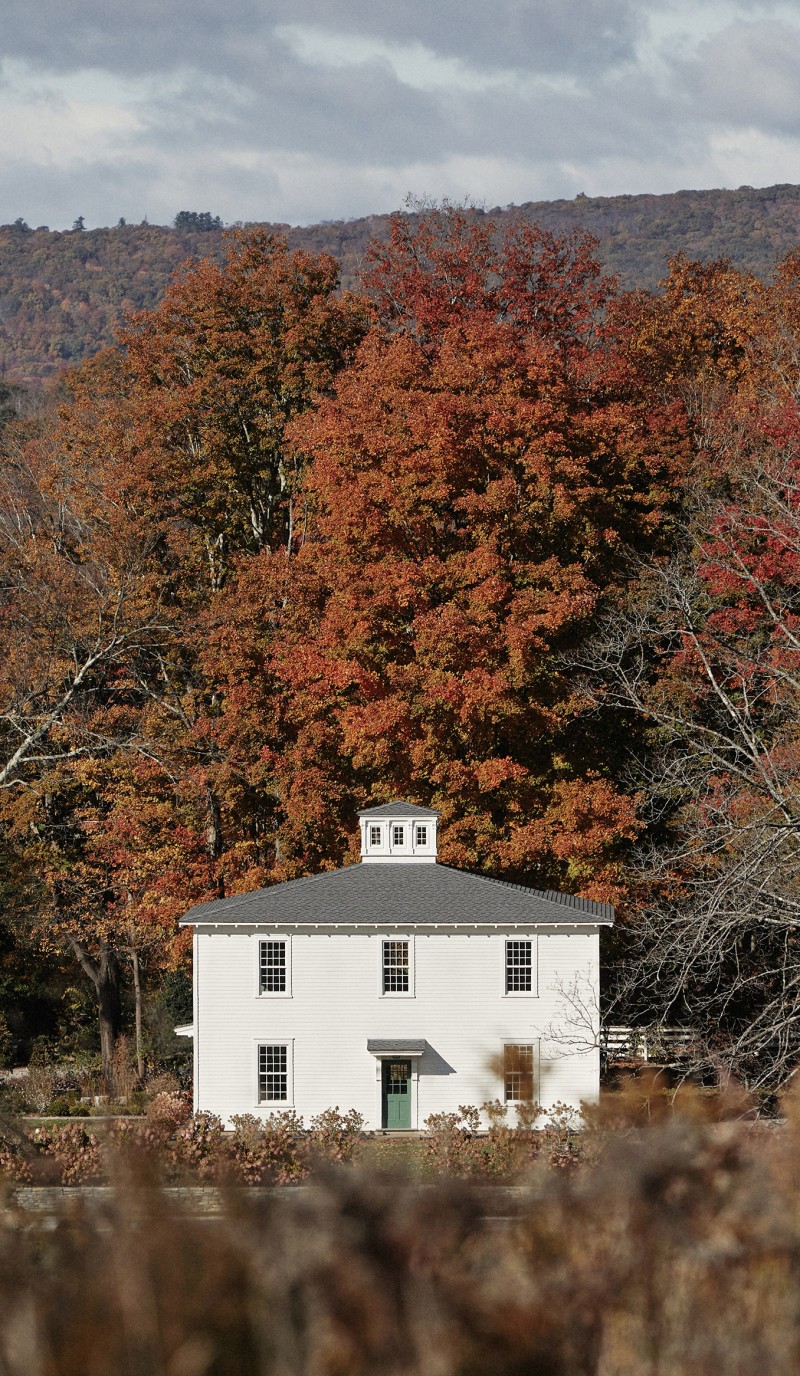
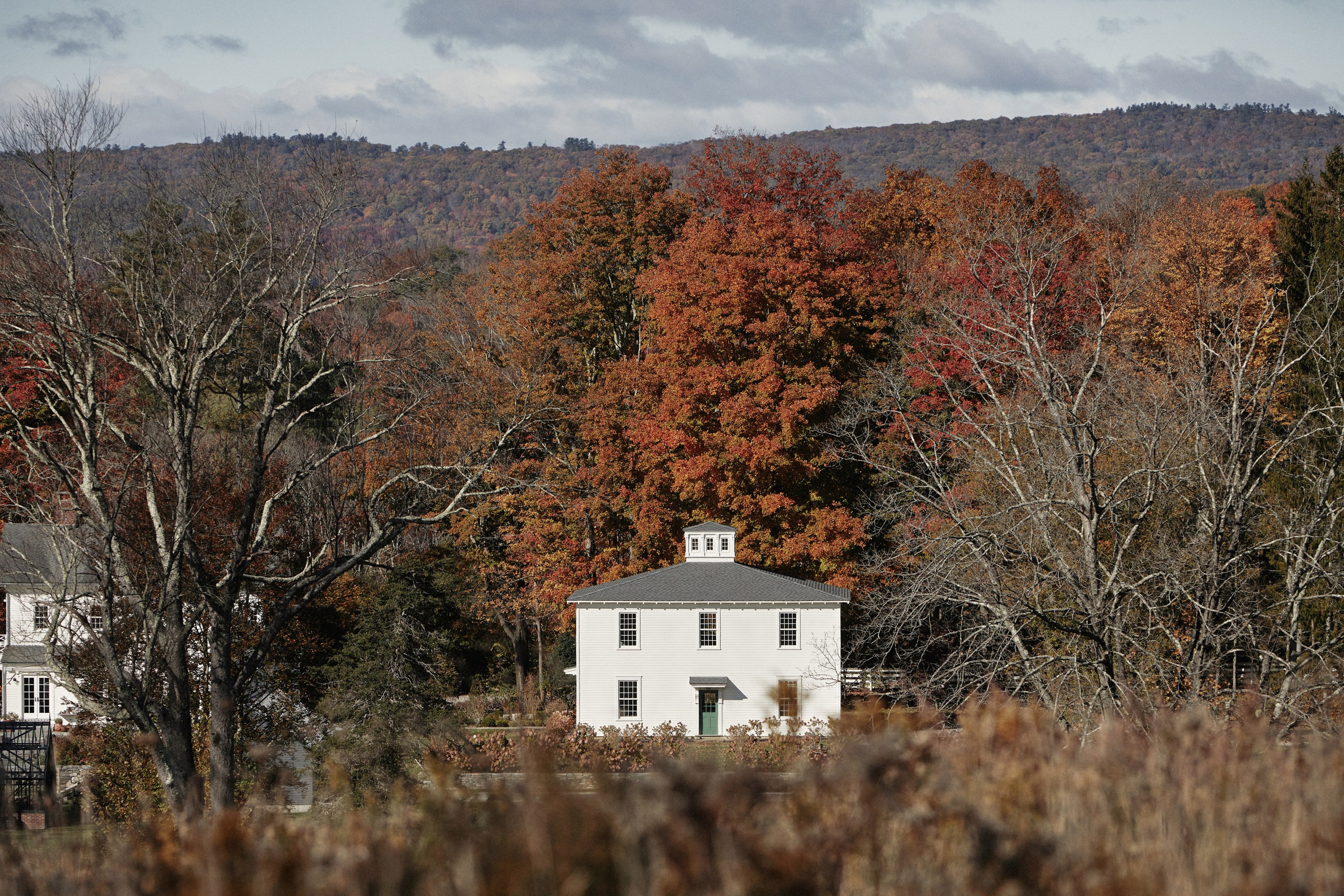
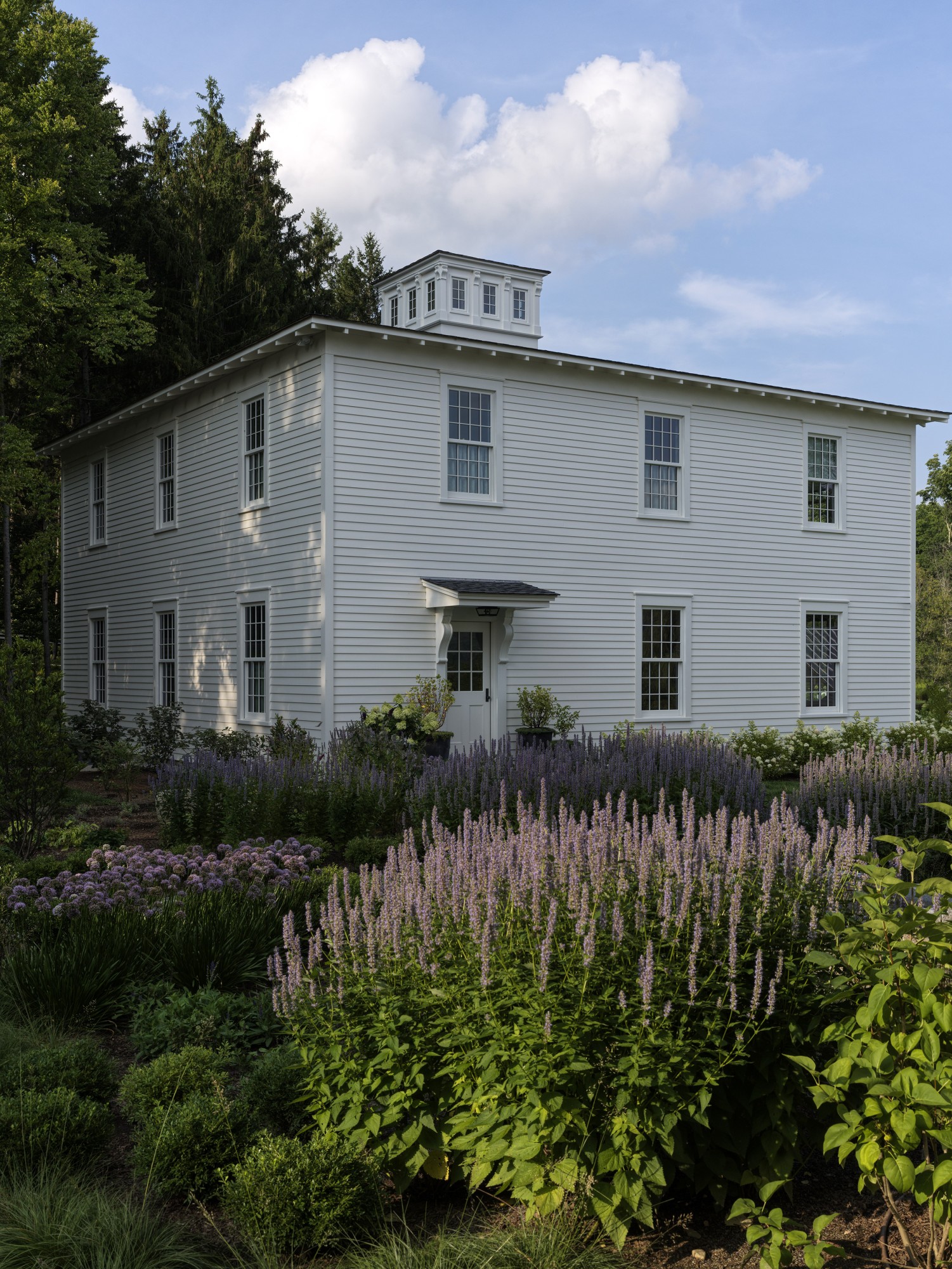
There were discussions about having a physical connection, via a tunnel or a corridor, between the main house and a new carriage house—Rafe having realized both strategies on previous projects. The design team, however, opted for a freestanding structure to ensure the composition of buildings felt traditionally authentic and in keeping with the rural setting. The clients requested a three-car garage, which dictated the length of the north and south elevations to be forty feet long. To avoid the building looking like a garage, the team landed on a certain cubic mass, with the scale of the building relating nicely to the goal of creating a “new–old” carriage house.
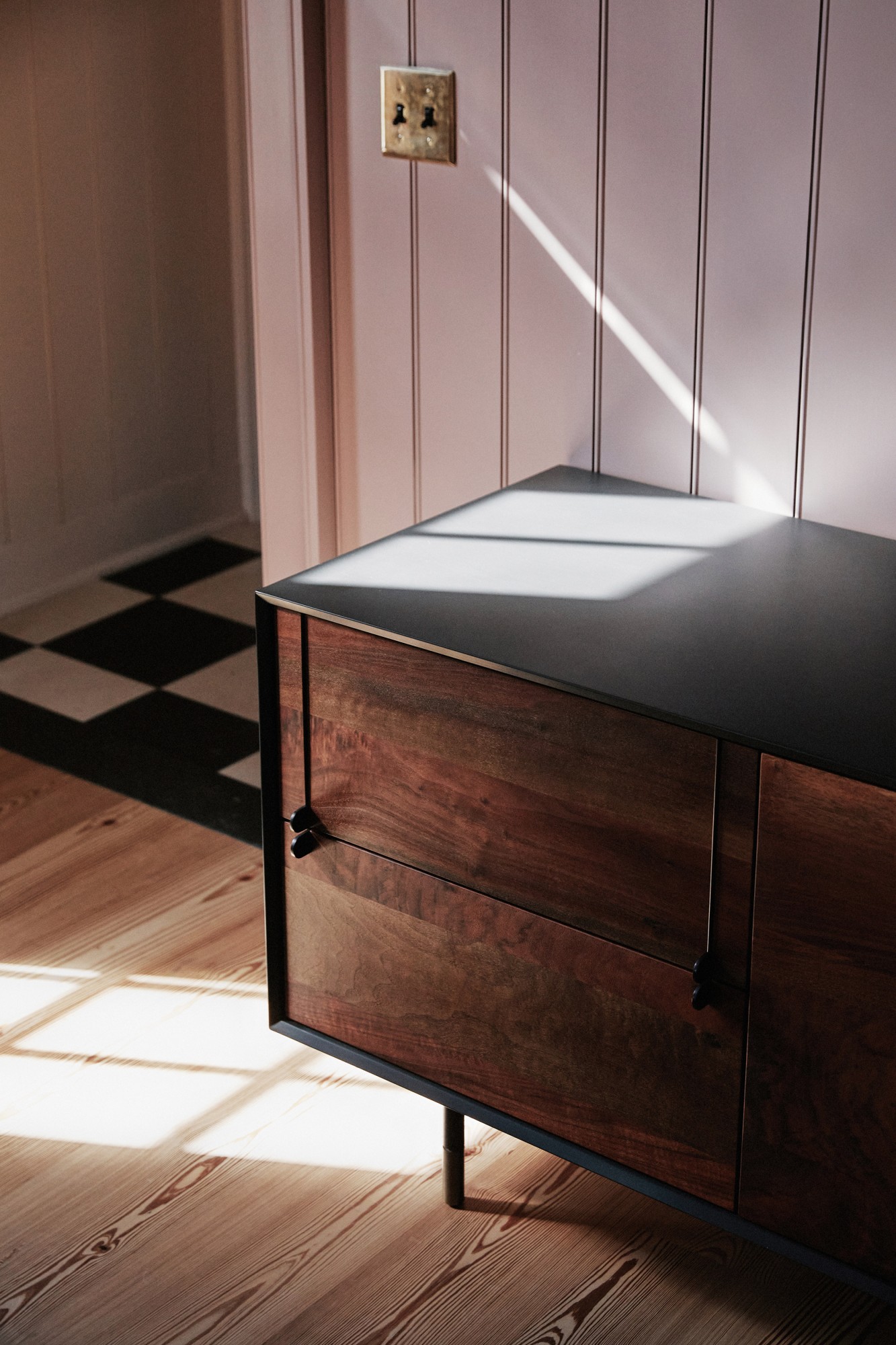
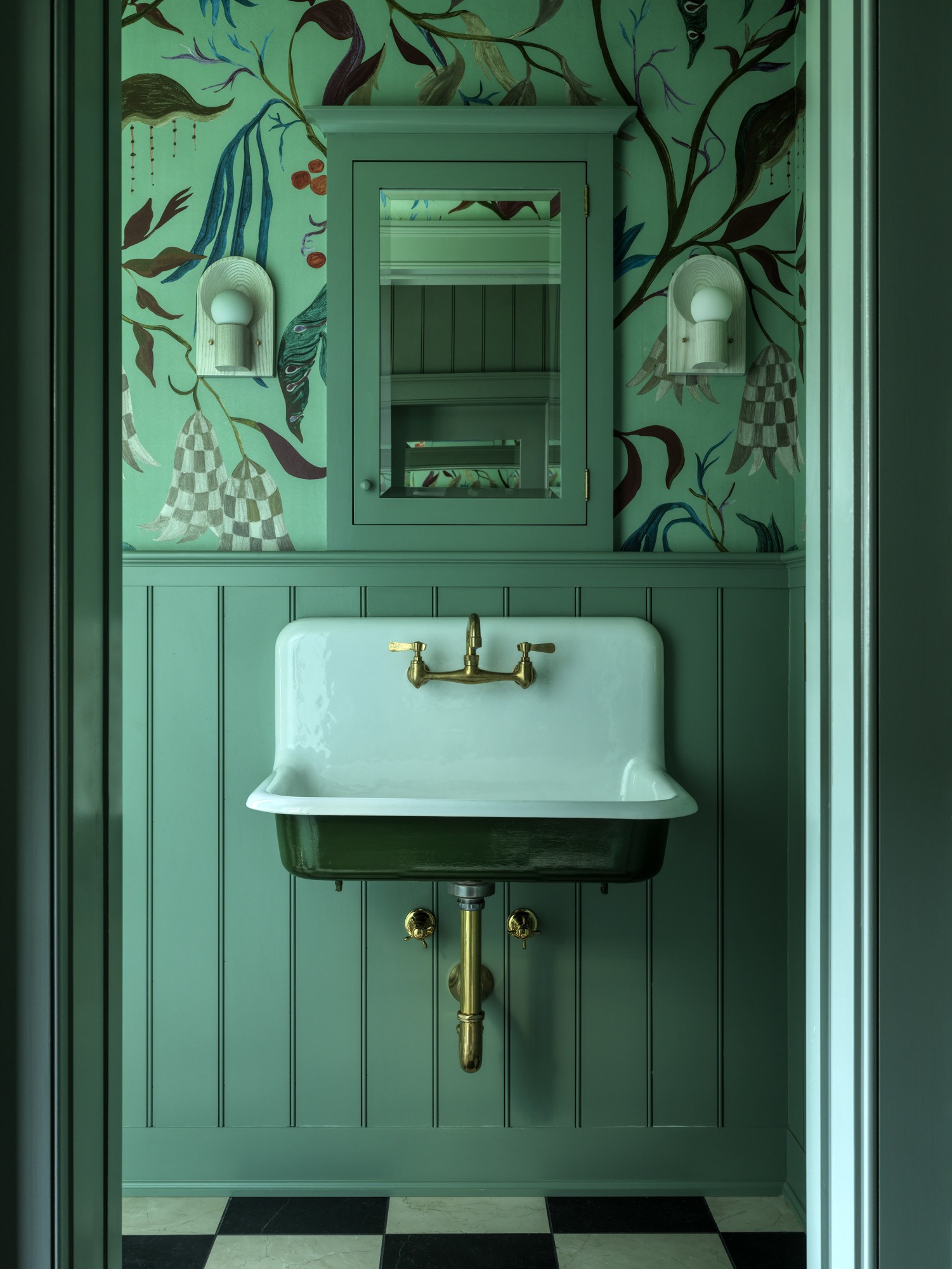
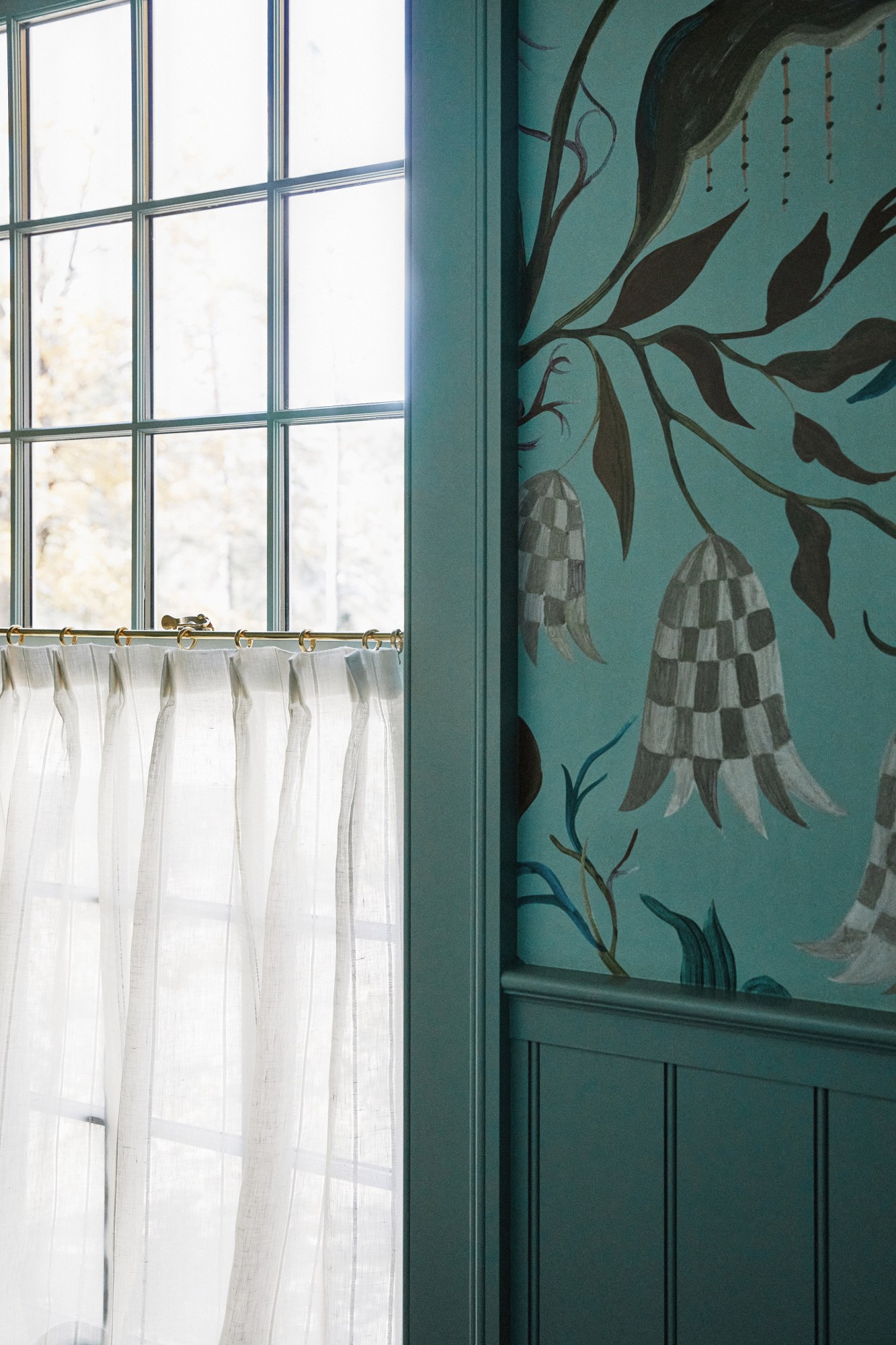
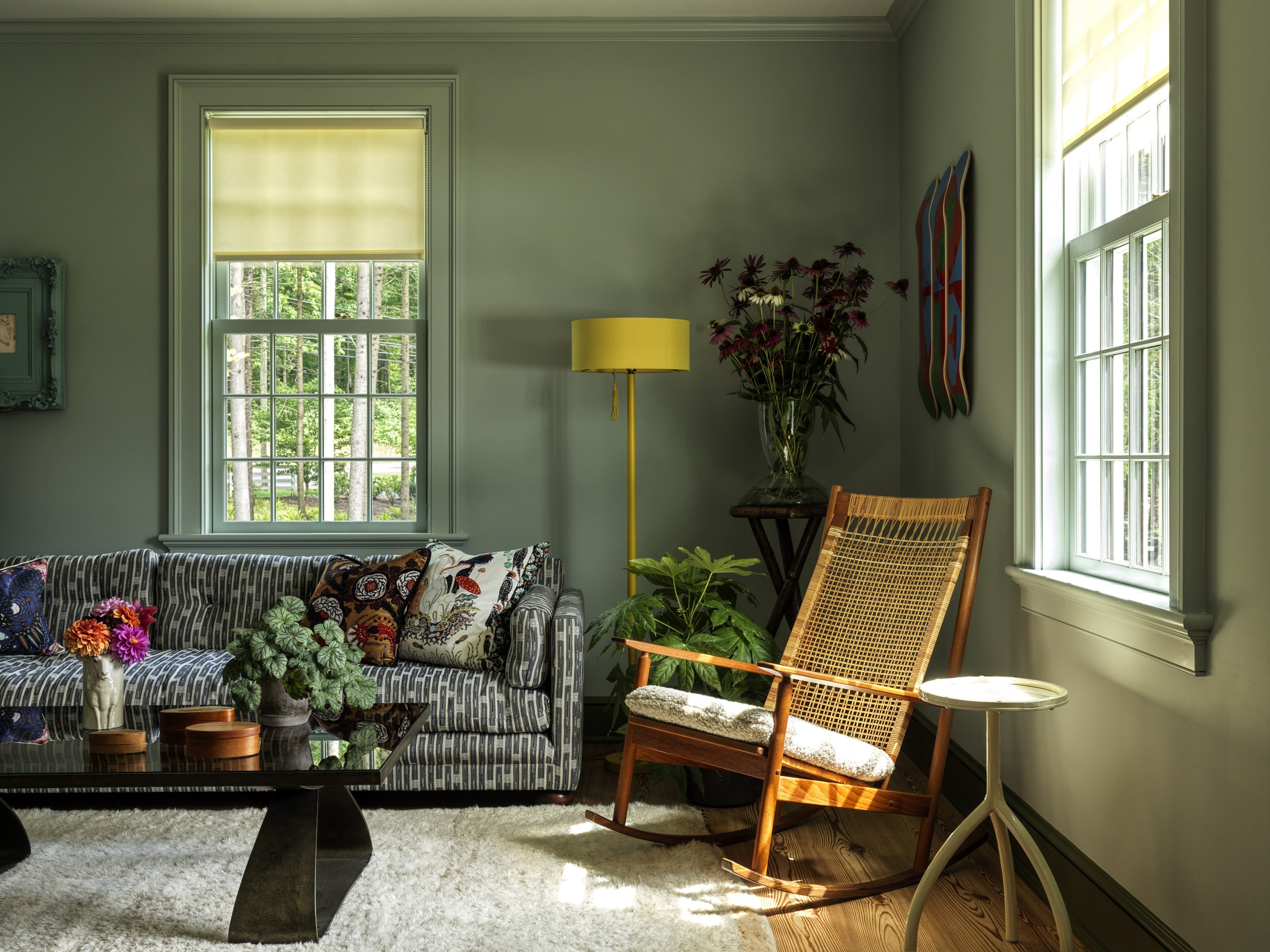
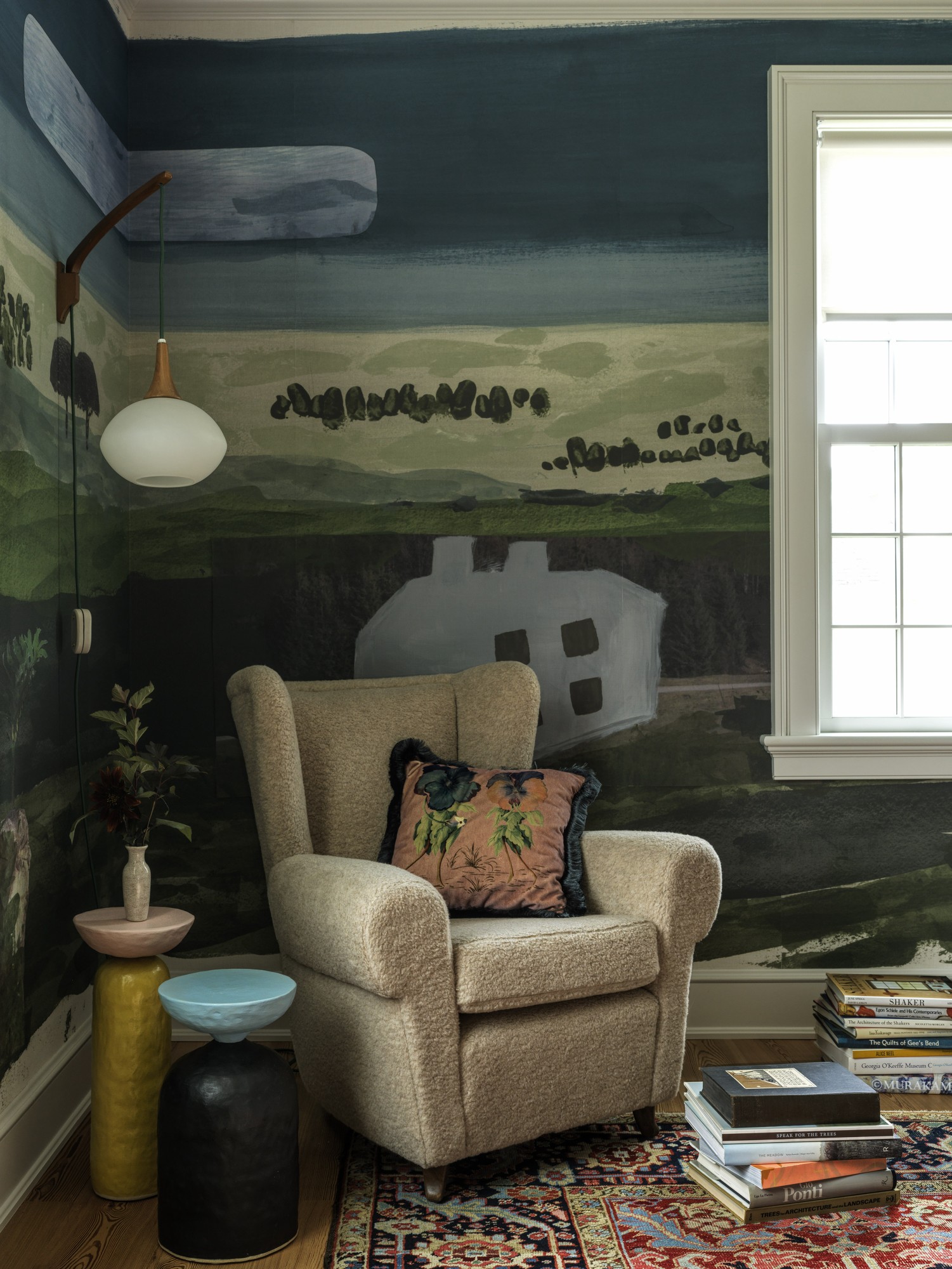
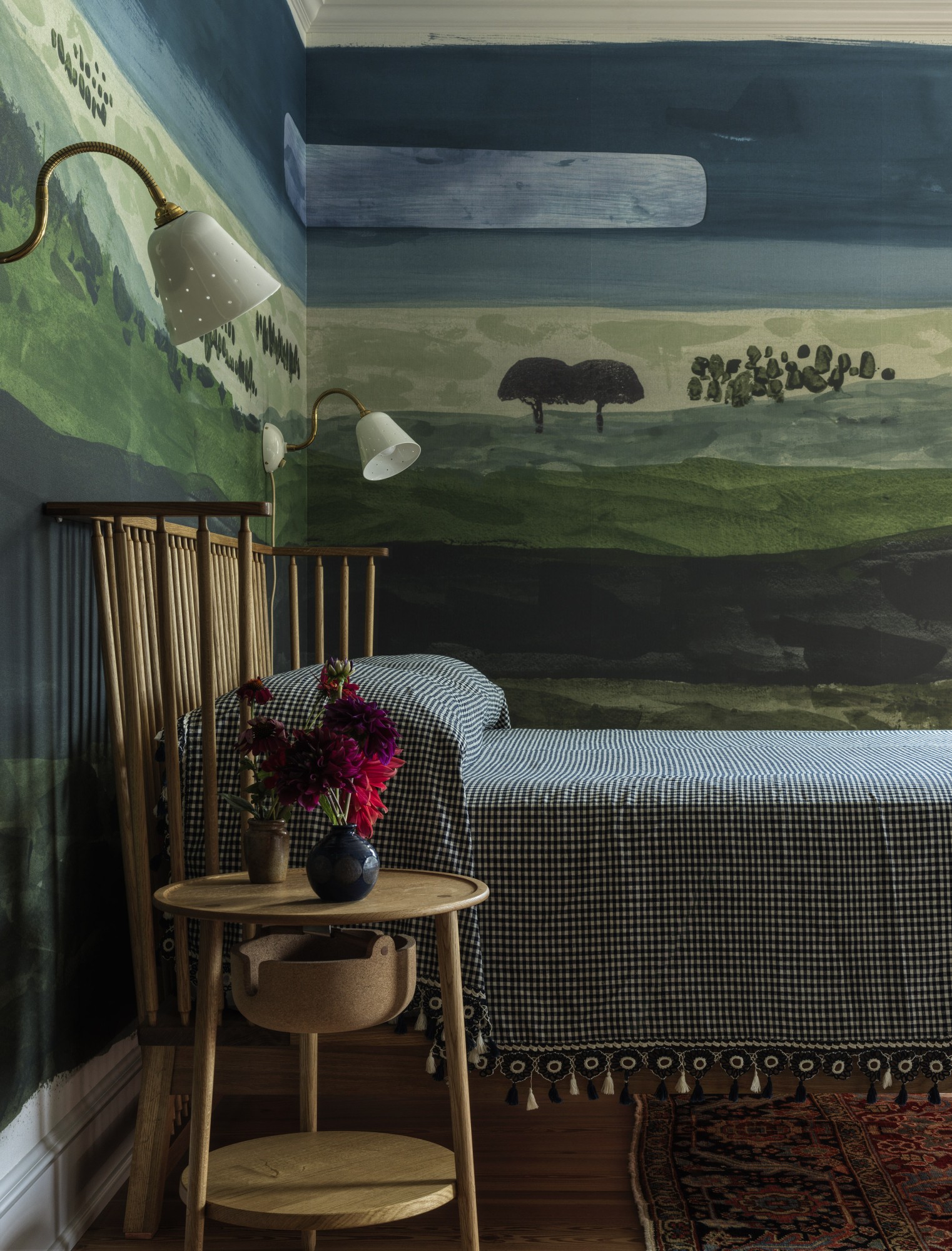
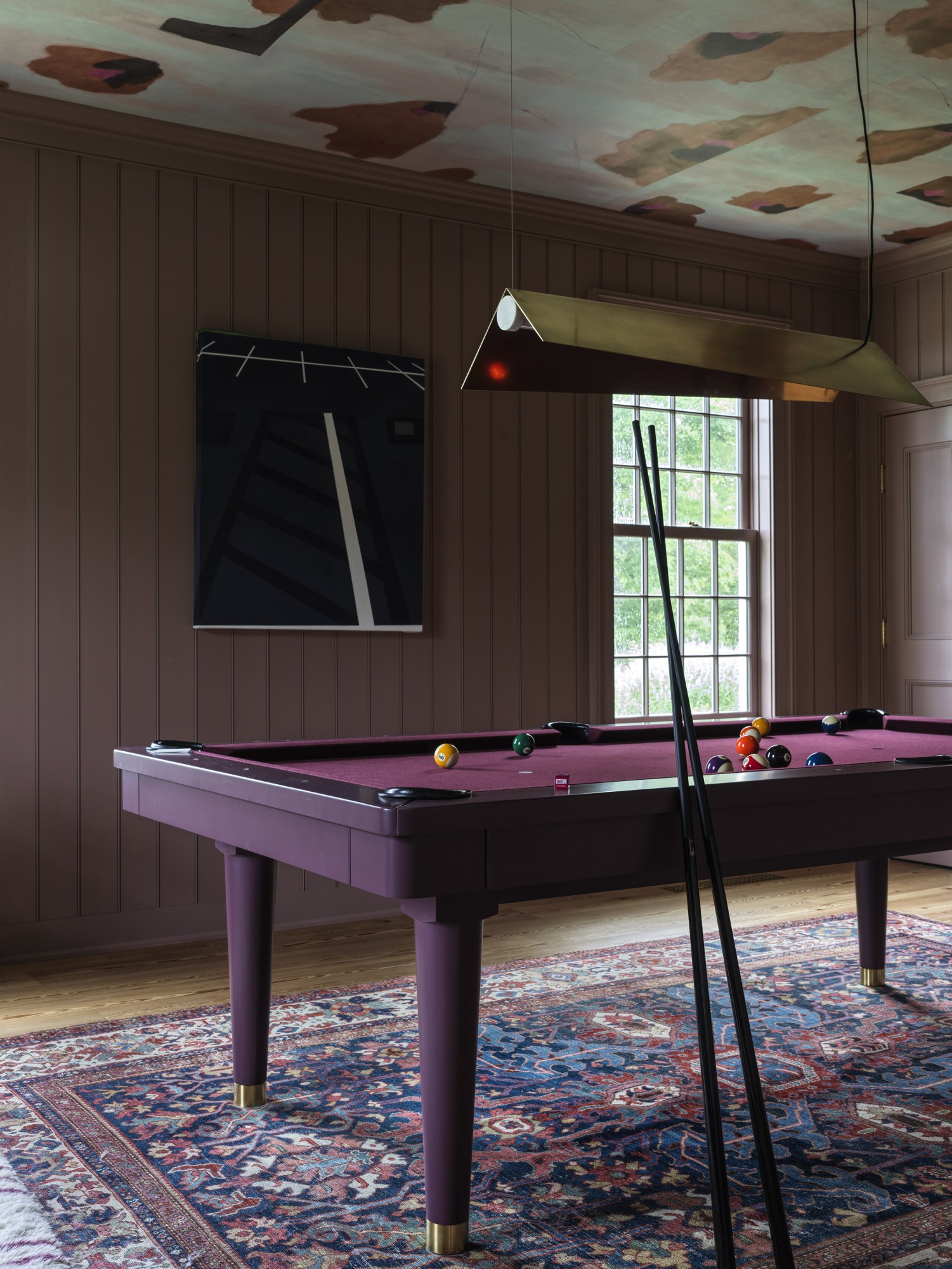
For this second phase, the interiors team joined the collaboration, bringing in color, bold pattern, and an eclectic range of furnishings from contemporary to mid-century modern. The tone of the carriage house was to be a departure from the main house, taking on a more casual, yet practical, approach. It would serve as a place of entertainment for the family and guests plus house a generous home office, exercise gym, indoor sauna, and recreation room with a pool table.
The team opted to go for a more intimate cluster of buildings rather than siting the structures far away from one another, which the land could easily accommodate. In the spirit of a traditional farm setting or even a Shaker compound, each building contributes to the overall success of the site plan. Seeing the other buildings while walking toward the house or looking out any of the windows evokes a feeling of community. It is this relationship between the structures, old and new, that prompts a sense of history and ultimately made this project so special.